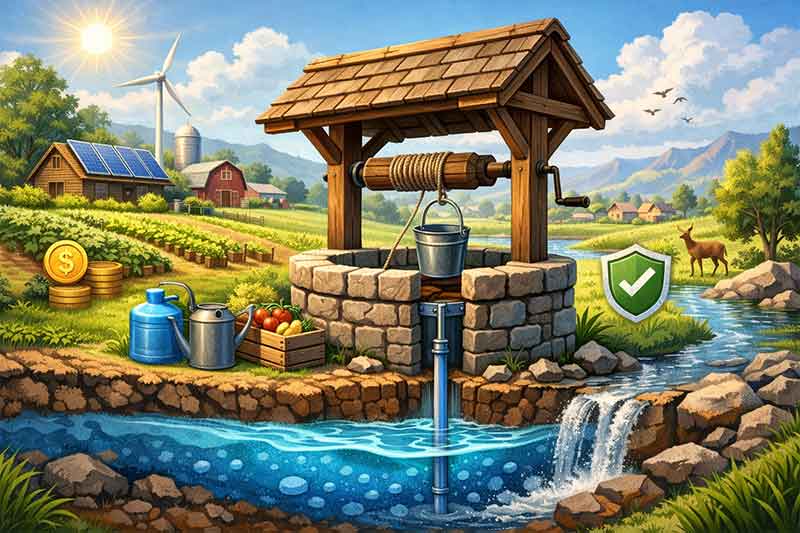
Water is one of the most basic human needs. Yet many people rarely think about where their water comes from. In many parts of the world, wells remain a reliable and practical source of clean water. Even in modern societies with advanced plumbing systems, wells still offer unique advantages.
This article explores the benefits of wells in a clear, structured, and easy-to-understand way. You will learn why wells have been used for centuries, why they are still relevant today, and how they can provide long-term value for households, farms, and communities.
What Is a Well and How Does It Work
A well is a structure created by digging or drilling into the ground to access groundwater. This water is stored in underground layers called aquifers. Once the aquifer is reached, water can be drawn to the surface using manual buckets, hand pumps, or electric pumps.
Wells can be shallow or deep. Shallow wells tap into water closer to the surface, while deep wells reach water that is often cleaner and more protected from contamination. Both types serve different needs depending on location and geology.
Understanding this basic concept helps explain why wells continue to be valuable across different environments.
1. Reliable Access to Fresh Water
One of the most important benefits of wells is reliable access to fresh water. Wells provide a direct connection to groundwater, which is often less affected by short-term weather changes.
Unlike surface water sources such as rivers or lakes, groundwater remains available even during dry seasons. This makes wells especially valuable in rural areas and regions with inconsistent rainfall.
For households, having a well means water availability does not depend entirely on public supply systems.
2. Independence from Municipal Water Systems
Many people value independence, especially when it comes to essential resources. Wells allow homeowners and communities to reduce or eliminate reliance on municipal water systems.
This independence can be crucial during infrastructure failures, natural disasters, or water supply restrictions. When public systems experience outages, wells often continue to function as long as power or manual pumping is available.
This sense of control is one of the most practical benefits of wells.
3. Long-Term Cost Savings
While installing a well requires an upfront investment, it can lead to significant long-term savings. Municipal water bills can increase over time due to rising treatment and infrastructure costs.
With a well, ongoing expenses are usually limited to maintenance, electricity for pumping, and occasional water testing. Over many years, these costs are often lower than monthly water bills.
For families planning to stay in one location long-term, this financial advantage becomes more noticeable with time.
4. Natural Filtration Through Soil and Rock
Groundwater is naturally filtered as it moves through layers of soil, sand, and rock. This natural process removes many impurities before the water reaches the well.
As a result, well water often contains fewer chemicals than treated municipal water. While testing is still essential, many people appreciate the clean and natural taste of well water.
This natural filtration is one of the lesser-known but significant benefits of wells.
5. Better Taste Compared to Treated Water
Many people who use well water notice a difference in taste. Municipal water is commonly treated with chlorine and other chemicals to ensure safety.
Well water, when properly maintained and tested, usually lacks these additives. This often results in a fresher, more natural taste that many people prefer.
Taste may seem subjective, but it strongly influences daily water consumption habits.
6. Environmentally Friendly Water Source
Wells can be an environmentally responsible option when managed properly. They reduce the need for extensive water treatment plants and long-distance water transportation.
Using local groundwater lowers energy consumption associated with pumping and processing water on a large scale. This can reduce the overall environmental footprint of water use.
For environmentally conscious households, this is one of the most appealing benefits of wells.
7. Support for Agriculture and Gardening
Wells play a critical role in agriculture. Farmers rely on wells to irrigate crops, water livestock, and maintain food production.
For home gardeners, wells provide a consistent water source for lawns, gardens, and landscaping. This is especially useful during drought restrictions that may limit municipal water use.
Access to well water allows plants to thrive without competing with household water needs.
8. Increased Property Value
In many regions, having a well can increase property value. Buyers often see wells as a valuable asset, especially in rural or semi-rural areas.
A properly documented and well-maintained water well signals reliability and self-sufficiency. This can make a property more attractive to potential buyers.
While value varies by location, wells are often considered a long-term investment.
9. Emergency Water Supply During Crises
Natural disasters such as earthquakes, storms, or floods can disrupt public water systems. Wells often remain functional during these events.
As long as the well structure is intact and pumping methods are available, water can still be accessed. This makes wells a critical emergency resource.
Preparedness is a growing concern, and this benefit of wells is becoming more relevant each year.
10. Minimal Chemical Exposure
Public water systems rely on chemical treatments to eliminate harmful bacteria. While generally safe, these chemicals can concern some individuals.
Well water, when properly tested and filtered if necessary, often contains fewer chemical additives. This appeals to people seeking a more natural lifestyle.
Lower chemical exposure is frequently cited among the health-related benefits of wells.
11. Customizable Water Treatment Options
With a well, water treatment decisions are in the hands of the owner. Filtration systems can be tailored to address specific water quality issues.
Whether the concern is iron, hardness, or sediment, solutions can be customized. This flexibility allows for precise control over water quality.
Municipal systems do not offer this level of personalization.
12. Consistent Water Pressure
Many well systems provide consistent water pressure once properly set up. Pressure tanks and modern pumps ensure steady flow throughout the home.
In contrast, municipal systems can experience pressure drops during peak usage times. Wells reduce this inconvenience.
Comfort and convenience are practical benefits that affect daily life.
13. Preservation of Local Water Traditions
In many cultures, wells hold historical and cultural significance. They represent community cooperation and survival.
Using wells helps preserve these traditions while adapting them to modern needs. This connection to heritage adds social and emotional value.
Cultural continuity is an often-overlooked benefit of wells.
14. Reduced Strain on Public Infrastructure
When households rely on wells, public water systems experience less demand. This reduces strain on aging infrastructure.
Lower demand can extend the lifespan of municipal systems and reduce the need for costly upgrades.
Wells indirectly support broader community sustainability.
15. Ideal for Remote and Rural Areas
Remote areas often lack access to municipal water systems. Wells make habitation possible in these locations.
By providing a dependable water source, wells support rural living, off-grid homes, and sustainable communities.
This practical benefit has enabled settlement in diverse environments worldwide.
16. Groundwater Stability Compared to Surface Water
Surface water sources are vulnerable to pollution from runoff, industrial waste, and agricultural chemicals. Groundwater is generally more protected.
This stability makes wells a safer long-term water option in many regions. However, responsible land use remains essential.
Protection from surface contamination is a major benefit of wells.
17. Lower Risk of Service Interruptions
Municipal water systems rely on complex networks of pipes and pumps. Breakdowns can occur unexpectedly.
Wells are simpler systems with fewer points of failure. Regular maintenance further reduces risks.
Reliability is one of the strongest practical benefits of wells.
18. Control Over Water Usage
Well owners have greater control over how much water they use. There are no usage limits imposed by public authorities.
This freedom is particularly useful for large families, farms, or water-intensive activities.
Responsible use is still important, but autonomy is a key advantage.
19. Suitable for Sustainable Living Practices
Wells align well with sustainable living goals. They can be paired with rainwater harvesting and solar-powered pumps.
These combinations reduce dependence on external utilities. They also support self-sufficient lifestyles.
For those pursuing sustainability, wells offer strong practical support.
20. Educational Value for Families
Having a well provides learning opportunities for children and adults. It teaches where water comes from and why conservation matters.
This awareness encourages responsible water use and environmental respect.
Education is an indirect yet meaningful benefit of wells.
21. Long Lifespan with Proper Maintenance
A well can last for decades when properly maintained. Many wells remain functional for 30 to 50 years or more.
Routine inspections, water testing, and pump maintenance extend lifespan significantly.
This durability contributes to the long-term value of wells.
22. Reduced Exposure to Water Rationing
In some regions, municipal water is rationed during droughts. Well owners are often exempt from these restrictions.
This ensures uninterrupted water access for essential needs.
Water security during shortages is a powerful benefit of wells.
23. Flexibility for Future Development
Properties with wells offer flexibility for expansion. Additional buildings, irrigation systems, or livestock operations can be supported.
This adaptability supports long-term planning and growth.
Wells provide a foundation for future development.
24. Contribution to Community Resilience
Communities with multiple wells are more resilient. They can support each other during emergencies or supply disruptions.
Shared knowledge and resources strengthen local networks.
Community resilience is an important social benefit of wells.
25. Timeless Relevance in a Changing World
Despite technological advancements, wells remain relevant. Climate change, population growth, and infrastructure challenges highlight their importance.
Wells offer a dependable, adaptable, and sustainable water solution.
Their continued use proves the lasting benefits of wells across generations.
Final Thoughts on the Benefits of Wells
The benefits of wells extend far beyond simple water access. They offer independence, reliability, environmental advantages, and long-term value. From households to farms and entire communities, wells support sustainable living and resilience.
While wells require responsible management and regular testing, their advantages are clear. In a world facing increasing water challenges, wells remain a practical and powerful solution.
Understanding these benefits allows you to make informed decisions about water sources and long-term sustainability.