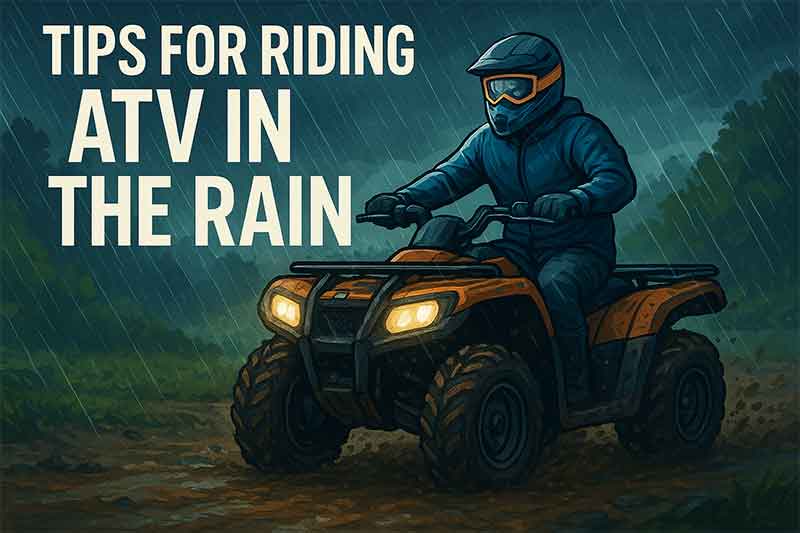
Riding an ATV in the rain can be thrilling, but it also brings new challenges that you shouldn’t ignore. Wet terrain, slippery surfaces, reduced visibility, and sudden weather changes can turn a fun ride into a risky situation if you’re not prepared.
In this guide, you’ll learn practical and easy-to-follow tips for riding ATV in the rain. We’ll cover everything from gear preparation to technique, maintenance, and safety. The goal is to help you stay in control, avoid unnecessary accidents, and enjoy the adventure even when the weather isn’t friendly.
Why Riding an ATV in the Rain Requires Extra Care
Rain quickly changes the behavior of the terrain. Dry dirt becomes slick mud. Sand can compact unexpectedly. Rocks and roots become slippery. Your visibility may drop, and your ATV will respond differently to throttle and brakes.
If you understand how these changes affect your ride, you’ll be able to adjust your technique and stay safe.
Prepare Yourself Before Heading Out
Wear Proper Waterproof Gear
Good gear can make or break your rainy ride. A waterproof jacket and pants help you stay dry, warm, and focused. Wet clothing can distract you and reduce your ability to react quickly.
Choose breathable waterproof layers so you don’t overheat. Gloves with moisture resistance give you better grip, while waterproof boots help you stay anchored on the footpegs.
Use a Clear or Yellow-Tinted Visor
During rain, visibility becomes one of your biggest challenges. Tinted visors that work in bright sunlight can make it hard to see during gloomy or rainy weather.
A clear or light-yellow visor enhances visibility and contrast, especially when trails become darker under cloudy skies or dense trees.
Pack Rain-Emergency Essentials
Always bring items like:
- A waterproof phone pouch
- A compact first-aid kit
- A toolkit with basic repair tools
- Extra gloves and socks
- A map in case your GPS fails
These small items can make a big difference during unexpected conditions.
Prepare Your ATV for Wet Trails
Check Your Tires
Your tires play the biggest role in traction. Deep-tread mud tires or all-terrain tires perform better in wet conditions. Make sure they have enough tread depth to grip slippery surfaces.
If the ground will be extra muddy, slight pressure reduction can improve surface contact. Just avoid going too low, or you might damage the rims.
Protect Electrical Components
Rain and mud can affect the ATV’s electrical system. Inspect your spark plug caps and battery connections to ensure they’re sealed tightly. If you ride often in the rain, consider using dielectric grease to protect electrical joints from moisture.
Lubricate Moving Parts
Wet conditions increase friction in hinges and joints over time. A good pre-ride lubrication helps protect the chain, levers, and pivot points. It also prevents rust buildup after the ride.
Install Mudguards if You Can
Mudguards help reduce the amount of water and mud splashing onto you and the engine. They’re not essential, but they make your ride cleaner and more manageable in heavy rain.
Techniques for Riding ATV in the Rain
Slow Down and Ride Smoothly
Riding aggressively in the rain is one of the quickest ways to lose control. Instead, use gradual throttle input and smooth steering. Jerky movements can cause your tires to lose traction and slide.
Slowing down gives you more time to react to puddles, hidden rocks, and slippery slopes.
Keep a Balanced Riding Position
Your body position affects how your ATV behaves. When trails are wet:
- Lean slightly forward when going uphill
- Lean back when descending
- Shift your weight side to side when cornering
This helps the tires maintain better contact with the ground, especially in mud.
Avoid Sudden Braking
Slamming the brakes on wet ground can lock your wheels and cause skidding. Instead, apply steady, controlled pressure on the brakes. Use engine braking when going downhill so you don’t rely entirely on the brake levers.
Scan the Trail More Carefully
Rain hides obstacles. Puddles may look shallow, but some can be deep pits. Wet leaves can act like ice, and roots become slick hazards.
Slow your pace and constantly scan the trail ahead. It helps you anticipate trouble early.
Choose the Best Line Through Mud
If you must ride through muddy sections, try aiming for the firmer-looking paths along the edges. The middle tends to be deeper and more churned by previous riders.
If your ATV starts to sink, keep a steady throttle and avoid spinning the tires excessively. Too much spinning makes you sink deeper.
Be Cautious With Water Crossings
Rain increases water flow in streams and small rivers. Never cross fast-flowing water even if it looks shallow. Water entering your intake or exhaust system can stall the engine and leave you stranded.
Walk the crossing first if you’re unsure about depth or current.
Maintain Traction in Slippery Conditions
Keep Your Steering Light
When the surface is slick, avoid oversteering. Let the ATV do part of the work while you guide it gently. Forcing the handlebars can cause the front wheels to slide out.
Use Lower Gears When Needed
Low gear provides more torque at slower speeds, which helps maintain control. It’s especially useful on steep or muddy sections where traction becomes uncertain.
Stay Relaxed, Not Stiff
A common mistake is tensing up when the terrain gets tougher. A relaxed posture allows your body to absorb bumps naturally and helps you steer more fluidly.
Stay Safe When Visibility Drops
Keep Your Lights On
Even light rain can make trails darker. Headlights help you see the surface better and alert others to your position.
Make sure your lights are clean and functioning before the ride.
Wipe Your Visor Often
Rain droplets on your visor distort your vision. Keep a microfiber cloth or glove squeegee ready so you can wipe it quickly while riding slowly.
Use Hand Guards to Deflect Water
Hand guards not only block branches but also reduce the amount of rain hitting your gloves. This helps maintain a secure grip even during heavy showers.
After-Ride Care for You and Your ATV
Clean Your ATV Immediately
Rainwater mixed with mud dries into a thick layer that’s hard to remove. Wash your ATV right after the ride while the mud is still soft.
Focus on:
- Undercarriage
- Chain and sprockets
- Radiator and cooling fins
- Brake components
Leaving mud on too long can clog the cooling system and cause rust.
Re-Lubricate Critical Parts
Once clean and dry, lubricate the chain, cables, and pivot points. This prevents moisture damage and keeps everything running smoothly.
Inspect for Damage
Rainy conditions increase the chance of hitting hidden obstacles. Inspect the tires, suspension, skid plates, and plastic panels for cracks or bends.
Catching small issues early saves you from expensive repairs later.
Dry Your Gear Properly
Gloves, boots, and jackets stay damp longer after a rainy ride. Hang them in a ventilated area to prevent mold or odor. Avoid placing them under direct sunlight for too long, especially waterproof materials.
Extra Tips for Riding ATV in the Rain
Ride With a Friend if Possible
Rain adds risk. Having a partner ensures that help is close if one of you encounters trouble.
Know When to Turn Back
Some conditions simply aren’t worth pushing through. Heavy storms, lightning, or flooded trails should be avoided. Turning back is a smart decision, not a failure.
Stay Updated With Weather Forecasts
Checking the weather before you go can help you prepare better. Sudden storms can drastically change trail conditions in minutes.
Frequently Asked Questions
Is it safe to ride an ATV in the rain?
Yes, it’s safe as long as you follow proper precautions, ride slower, and prepare both yourself and your ATV for wet conditions.
What tires are best for rainy conditions?
All-terrain or mud tires with deeper tread provide better grip on wet and muddy trails.
Can rain damage my ATV?
Rain itself doesn’t damage an ATV, but water exposure to electrical components or prolonged mud buildup can cause problems if the ATV isn’t cleaned properly afterward.
Should beginners ride in the rain?
Beginners can ride in light rain, but it’s better to gain experience on dry terrain first. Rainy conditions require more control and awareness.
How do I avoid sliding?
Use smooth throttle and braking, avoid sudden movements, and maintain proper body balance. Tire choice also plays a big role.
Final Thoughts
Riding an ATV in the rain can be an unforgettable experience when done with the right preparation and mindset. With proper gear, careful technique, and attention to safety, you can enjoy the trails even when the weather turns wet.
The key is balance: stay cautious while still embracing the adventure. Follow these tips for riding ATV in the rain, and you’ll feel more confident every time the sky gets cloudy.
If you are in Bali, you can try ATV Ubud Adventure which provides ATV jungle, waterfall and rice field tracks.