
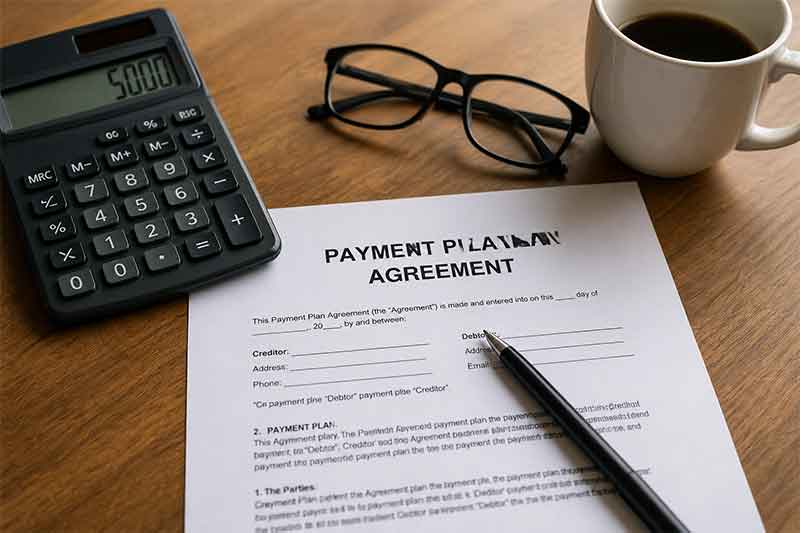
A payment plan agreement is a simple written contract that explains how someone will pay a debt over time. If you’re asking how do I write a payment plan agreement, the key is clarity. You need to spell out the amount owed, the payment schedule, and what happens if payments are missed. No vague terms, no confusion.
A well-written agreement protects both sides. It helps avoid disputes and keeps expectations clear from day one.
What to Include in a Payment Plan Agreement
Start with the basic details. Every payment agreement should clearly identify the people involved and the purpose of the agreement.
Include these essentials:
- Full names and contact details of both parties
- Total amount owed
- Payment schedule (weekly, biweekly, monthly)
- Payment method (bank transfer, cash, etc.)
- Due dates for each payment
- Late fees or penalties (if any)
- Consequences of missed payments
- Signatures and date
If you’re serious about learning how do I write a payment plan agreement, think of it as writing instructions. Anyone reading it should understand exactly what to do without asking questions.
Keep the Terms Clear and Simple
Avoid legal jargon unless necessary. Simple language reduces misunderstandings. Instead of writing complicated clauses, use direct sentences like:
“The borrower agrees to pay $200 on the 1st of each month until the balance is paid in full.”
This approach makes your payment agreement template easier to follow and enforce.
Clarity is more important than sounding formal.
Define the Payment Schedule Properly
The payment schedule is the heart of the agreement. Be specific. Don’t just say “monthly payments.” Specify dates and amounts.
For example:
- $500 total debt
- $100 per month
- Payments due on the 5th of each month
- Starting date and ending date
If you’re researching how do I write a payment plan agreement, this is where most mistakes happen. Vague schedules lead to late payments and confusion.
Include Late Payment Terms
Always explain what happens if a payment is late. This protects you legally and sets expectations early.
You can include:
- Grace period (e.g., 5 days)
- Late fee (fixed or percentage)
- Option to cancel the agreement after repeated missed payments
This section strengthens your debt repayment agreement and avoids future arguments.
Add Optional Legal Protection
While not always required, adding legal clauses can help:
- Governing law (which state or country rules apply)
- Dispute resolution method (court or mediation)
- Acceleration clause (full balance due if default occurs)
If the amount is large, consider having a lawyer review it. But for small personal agreements, a simple written contract is often enough.
Sample Payment Plan Agreement Format
Here’s a simple structure you can follow:
- Title: Payment Plan Agreement
- Parties involved
- Total amount owed
- Payment schedule
- Payment method
- Late fees and penalties
- Default terms
- Signatures
This basic format answers the question how do I write a payment plan agreement without overcomplicating things.
Common Mistakes to Avoid
Many people rush the process and create weak agreements. Avoid these common errors:
- Not writing the agreement down
- Leaving out payment dates
- Using unclear language
- Forgetting signatures
- Not keeping a copy for both parties
Even a simple installment agreement should be documented properly.
Why a Written Agreement Matters
A written agreement builds trust and accountability. It shows both parties are serious. It also provides proof if disputes arise.
Whether it’s a personal loan, business deal, or informal debt, having a structured payment plan reduces stress and confusion.
If you’re still wondering how do I write a payment plan agreement, remember this: simple, clear, and complete always wins.
Final Thoughts
Writing a payment plan agreement isn’t complicated. Focus on clarity, include all key details, and avoid vague terms. That’s all you need to create a solid agreement.
Once everything is written and signed, both sides can move forward with confidence, knowing exactly what’s expected.